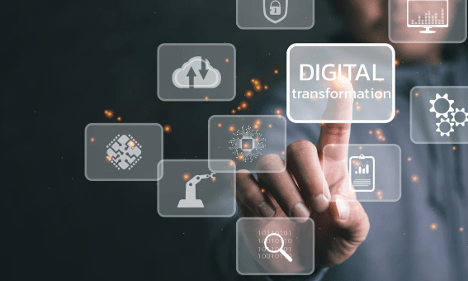
Manufacturing is becoming more connected, automated, and data-driven. Across the plant floor, organizations are introducing robotics, artificial intelligence, machine vision, connected equipment, advanced analytics, digital twins, and automated material handling systems to improve productivity and visibility.
Together, these technologies help create what is often called the digital factory. However, a digital factory is not created simply by purchasing equipment or installing new software. Each system must work within a real production environment, connect with existing processes, support business objectives, and earn the confidence of the people expected to use it. That makes digital transformation a talent challenge as much as a technology challenge. Manufacturers need leaders who can establish a clear strategy, engineers who can design and integrate systems, technology professionals who can connect and protect data, and operations teams that can turn new capabilities into consistent performance.
The Digital Factory Is More Than a Technology Project
A digital factory brings physical production and digital intelligence together. Machines, sensors, software, robotics, workers, and business systems share information that can help an organization make faster and better-informed decisions. The goal may be to reduce downtime, improve quality, increase production, strengthen traceability, enhance worker safety, or respond more effectively to customer demand. Achieving those outcomes requires more than a successful installation. It requires alignment among engineering, operations, information technology, supply chain, finance, and executive leadership.
This is why the transition toward smart manufacturing cannot belong to only one department. It must be supported by a team that understands both the technical possibilities and the practical realities of production. DRI’s Manufacturing recruiting and executive search practice supports organizations seeking professionals across the many disciplines involved in modern manufacturing.
Leadership Must Connect Technology to Business Value
Every digital factory initiative needs a clear reason for existing. A manufacturer may want to increase capacity, address labor challenges, reduce waste, improve customer responsiveness, or gain better insight into production performance. Without clear priorities, an organization can invest in advanced technology without creating meaningful business value.
Executives and senior leaders must determine which problems should be addressed first, how success will be measured, and how new systems will support the company’s broader strategy. They must also establish how responsibilities will be divided among plant leadership, engineering, operations, IT, and external technology partners. Strong digital manufacturing leaders do not approach transformation as a collection of disconnected projects. They build a roadmap that connects technology decisions to operational and financial outcomes.
Depending on the organization, this responsibility may belong to a Chief Operating Officer, Chief Technology Officer, Vice President of Engineering, Vice President of Manufacturing, Director of Automation, or another transformation-focused leader. The title matters less than the individual’s ability to build alignment and translate strategy into execution.
Engineering Talent Builds the Foundation
Engineers are central to the digital factory because they understand how equipment, controls, products, and production processes work together. Controls engineers, automation engineers, electrical engineers, mechanical engineers, robotics engineers, systems engineers, and manufacturing engineers may all contribute to the transformation. Their work can include selecting technology, designing automated cells, programming controls, integrating equipment, improving process flow, and troubleshooting problems after implementation.
The strongest candidates combine technical knowledge with an understanding of production realities. A technically impressive solution may still fail if it is difficult to maintain, interrupts workflow, creates unnecessary complexity, or cannot operate reliably under plant conditions. Manufacturers therefore need engineering talent that can evaluate technology not only for what it can do, but also for how effectively it can support operators, maintenance teams, quality requirements, and long-term production goals.
IT and Operational Technology Must Work Together
One of the most important relationships within a digital factory is the connection between information technology and operational technology. IT teams traditionally focus on enterprise systems, networks, data governance, cloud infrastructure, cybersecurity, and business applications. Operational technology teams focus on the equipment, controls, sensors, and systems responsible for physical production.
As factories become more connected, those responsibilities increasingly overlap. Production data may need to move from equipment into analytics platforms, maintenance tools, enterprise resource planning systems, or customer-facing applications. At the same time, manufacturers must protect connected systems without unnecessarily disrupting production. This creates demand for professionals who can communicate across both environments. They understand why IT standards and cybersecurity requirements matter, but they also recognize that a plant cannot always be managed like a traditional office network.
DRI’s Technology and IT recruiting team works with organizations seeking professionals across artificial intelligence, data, cybersecurity, manufacturing IT, software, systems, and other technology disciplines.
Industrial AI Needs People Who Understand Manufacturing
Artificial intelligence can help manufacturers identify patterns, forecast equipment failures, detect quality concerns, improve scheduling, and support faster decision-making. However, an algorithm alone does not understand the complete context of a production environment. To create useful industrial AI applications, organizations need people who can connect data science with engineering and operations. These professionals must understand what the data represents, how it is collected, where it may be incomplete, and which recommendations can realistically be implemented.
An AI system may identify an unusual pattern, but experienced professionals must determine whether that pattern reflects equipment wear, a change in materials, an operator adjustment, a sensor problem, or another cause. This is why the digital factory needs translators as well as technologists. Data scientists, AI engineers, manufacturing experts, product leaders, and operations professionals must work together to move an idea from a pilot program into a trusted operating tool.
DRI’s Industrial AI recruiting practice helps organizations identify professionals capable of advancing intelligent manufacturing while remaining connected to real production and business needs.
Robotics and Automation Require Specialized Expertise
Robotics and automation are often among the most visible components of the digital factory. They can support material movement, inspection, machine tending, packaging, palletizing, welding, assembly, and other production activities. Successful deployment, however, depends on a much broader team than the robot itself. Organizations may need application engineers, controls engineers, integration specialists, project managers, machine vision experts, safety professionals, field service leaders, and product managers.
They also need people who can determine where automation makes sense. Not every process should be automated, and not every proposed solution will produce the expected return. The right talent evaluates process stability, product variation, cycle time, safety, available space, maintenance requirements, and workforce impact before choosing an approach. Through its Robotics executive search and recruiting practice and Automation and Industrial Technology practice, DRI connects organizations with professionals who understand the technical, operational, and commercial sides of industrial automation.
Operations Turns Technology into Performance
Technology only creates value when it becomes part of everyday operations. Plant managers, operations directors, production supervisors, continuous-improvement leaders, and frontline employees determine whether a new system is used consistently and effectively. These professionals understand production schedules, staffing requirements, customer commitments, quality expectations, and the practical pressures that shape decisions on the plant floor. Their involvement should begin before implementation rather than after a system has already been designed.
When operations leaders participate early, they can identify workflow concerns, clarify performance expectations, and help the project team understand how the technology will affect employees and production. Strong operations leaders also create accountability after launch. They establish processes, monitor results, address adoption problems, and ensure that the organization continues improving instead of treating installation as the finish line.
Maintenance and Field Service Protect the Investment
Connected equipment and automated systems require ongoing support. If a manufacturer cannot diagnose failures, obtain replacement parts, update software, or maintain new equipment, even a successful implementation can become an operational risk. Maintenance technicians, reliability engineers, controls specialists, service managers, and field service professionals are therefore essential members of the digital factory workforce. They help protect uptime, extend equipment life, and provide practical feedback that can improve future system designs.
Organizations should consider support requirements before selecting a technology. This includes determining whether the necessary skills already exist internally, whether current employees can be trained, and how much support will depend on an equipment provider or systems integrator. A digital factory should not become so complex that only one employee understands how to keep it operating. Building shared knowledge, clear documentation, and dependable technical support is part of building a resilient manufacturing operation.
The Digital Factory Extends Beyond the Plant
Modern manufacturing does not stop at the facility walls. Suppliers, warehouses, transportation providers, distributors, and customers all affect how effectively an organization can respond to demand. Digital systems can improve visibility across this network, but they also create new leadership and talent requirements. Supply chain professionals must understand data, planning technology, inventory strategy, sourcing risk, logistics, and changing customer expectations.
Automated material handling systems may connect production with storage and fulfillment, while planning platforms may use real-time information to adjust purchasing or scheduling decisions. These tools are most valuable when the people using them understand the complete flow of materials and information. DRI’s Supply Chain Management recruiting team and Automated Material Handling practice help companies identify professionals who can improve the movement of products, information, and resources throughout an organization.
People and Change Management Cannot Be an Afterthought
Digital transformation can create uncertainty for employees. Workers may question how automation will affect their responsibilities, whether they will receive sufficient training, and how performance expectations may change. Organizations that ignore these concerns may encounter resistance even when the technology itself is effective. Leaders must communicate why the change is happening, how employees will be supported, and what new opportunities may result from the transformation.
Training should also be specific to each employee’s role. An operator may need to understand how to interact with a new system, while a maintenance technician needs deeper troubleshooting knowledge and a plant manager needs access to performance data. The strongest digital factory leaders treat employees as participants in the transformation rather than obstacles to it. They seek input from the people closest to the process and use that feedback to improve both the technology and its implementation.
Signs the Talent Strategy Is Not Ready
A manufacturer may have a well-funded technology plan but still lack the people needed to execute it. Warning signs can include unclear ownership, repeated pilot projects that never expand, dependence on a small number of technical employees, poor communication between IT and operations, or difficulty maintaining systems after installation.
The organization may also be hiring each position independently without considering how the roles must work together. An automation engineer, data leader, plant manager, and cybersecurity professional may each be highly qualified, but the transformation can still struggle if no one is responsible for connecting their efforts. Before expanding a digital factory initiative, leaders should identify the capabilities already present, the skills that can be developed internally, and the positions that require external recruitment. This workforce plan should be connected directly to the organization’s technology roadmap.
Why Specialized Recruiting Matters
Digital manufacturing talent frequently sits at the intersection of several disciplines. The strongest candidates may understand engineering and software, automation and operations, or artificial intelligence and industrial processes. These combinations can be difficult to evaluate through a general job description. Titles also vary significantly between organizations, meaning two professionals with similar responsibilities may appear very different on paper.
Many qualified candidates are already employed and may not be actively searching for another opportunity. Reaching them requires industry knowledge, a specialized professional network, and a clear explanation of the organization’s technology environment, business goals, and potential impact. Direct Recruiters’ executive search services help industrial and manufacturing organizations identify leaders capable of guiding transformation, building cross-functional teams, and connecting technology investments to sustainable growth.
Building the Team Behind the Technology
The digital factory is not a single machine, platform, or department. It is an operating environment created by people with different areas of expertise working toward shared goals. Executives establish the direction. Engineers and technology professionals build and connect the systems. Operations and maintenance teams turn those systems into reliable performance. Supply chain professionals extend the value across the broader network. Employees at every level contribute the experience needed to make transformation practical and sustainable.
Organizations that focus only on technology may complete an installation. Organizations that build the right team are more likely to create a lasting competitive capability. As manufacturing becomes increasingly connected and intelligent, the companies that succeed will be those that recognize talent as the foundation of the digital factory.