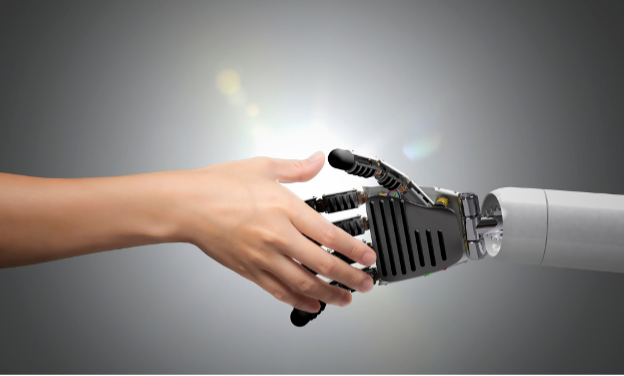
Artificial intelligence is now becoming part of everyday business, companies are using AI to analyze data, improve customer service, manage employees, forecast sales, and make faster decisions. Because of this, AI is changing almost every part of the workplace, from how businesses hire people to how they market products and serve customers.
AI is not simply replacing workers- in many cases, its helping employees work faster and focus on more important tasks. According to Gallup’s 2026 Workplace Research, AI use among U.S. employees has continued to rise, and workers who use AI often report productivity benefits. However, Gallup also notes that AI is creating both positive and negative workplace changes, including disruption, staffing changes, and uncertainty about how work should be done.
AI and Hiring
One of the biggest areas AI is affecting is hiring. Companies can now use AI tools to review resumes, write job descriptions, schedule interviews, and identify candidates who may fit a role. This can make the hiring process faster and more organized, especially for companies that receive hundreds of applications.
However, AI in hiring also creates risks, if the technology is not managed carefully, it can overlook qualified candidates or repeat bias from past hiring data. For example, if a company’s past hiring patterns favored certain backgrounds, an AI system trained on that data may continue the same pattern. This is why businesses still need human judgment in the hiring process. AI can help narrow the search, but people should review and ultimately make the final decision.
AI is also changing what companies look for in candidates. Businesses increasingly want employees who understand how to use AI tools, analyze information, and adapt to new technology. Stanford’s 2026 AI Index reported that AI-related skills are appearing more often in job postings, showing that AI’s knowledge is becoming a more valuable workplace skill.
AI and Human Resources, Marketing, and Finance
Human Resources
HR departments use AI to answer employee questions, manage benefits information, support onboarding, track performance data, and recommend training programs. This helps HR teams save time on repetitive tasks and focus more on employee development, workplace culture, and problem-solving.
Issues like conflict, discipline, mental health, promotions, and layoffs require empathy and careful judgment. Society for Human Resource Management’s AI report, found that AI adoption is often leading to shifts in job responsibilities, rather than massive job replacement- meaning HR’s role is changing, not disappearing.
Marketing
Marketing, however, is one of the areas where AI is having the most visible impact. AI can help companies understand their customers better. For example, AI can analyze purchasing habits, website traffic, social media engagement, and customer feedback. This helps businesses figure out what people want, when they want it, and how to reach them. AI can generate ideas, but businesses need people to make sure the message feels authentic and fits the brand. The best marketing teams will use AI as a tool, not as a full replacement for human creativity.
Finance
AI is becoming more important in finance and accounting as well. AI can quickly process large amounts of data that would take people much longer to review manually. For instance, AI can help a company identify unusual spending patterns or predict future cash flow. This gives business leaders better information when making decisions about budgets, hiring, pricing, and growth.
However, financial decisions still require human oversight. AI can make mistakes if the data is incomplete or misleading. Business leaders need to understand the numbers, question the results, and make sure decisions are ethical and realistic.
AI and Leadership
Leaders now need to understand how technology affects employees, customers, and company strategy. They do not need to be AI experts, but they do need to know how to use AI responsibly. Good leaders will ask important questions: Is AI making our business more efficient? Are we using AI fairly?
AI can help leaders make better decisions, but it cannot replace leadership qualities like communication, empathy, vision, and trust. The companies that succeed with AI will be the ones that combine technology with strong human leadership.
AI and Employee Productivity
One of the biggest benefits of AI is productivity, employees can use AI to summarize documents, draft emails, organize ideas, analyze data, and automate repetitive work. This can help people complete tasks faster and spend more time on work that requires creativity, strategy, or personal interaction. At the same time, businesses need to train employees on how to use AI correctly. Without training, workers may misuse AI, rely on inaccurate information, or feel overwhelmed by new tools. AI works best when employees understand both its strengths and its limits.
The Risks of AI
Although AI has many benefits, it also creates challenges such as overreliance. AI can produce incorrect information, make unfair recommendations, or miss important context. If businesses accept AI answers without checking them then they are susceptible to miss mistakes that may have been produced by AI technology.
There is also the issue of employee fear. Some workers worry that AI will replace their jobs. Companies need to communicate clearly about how AI will be used and provide training so employees can adapt, the goal should be to help workers grow with the technology, not feel threatened by it.
In Summation
AI is affecting nearly every part of the business world. It impacts hiring, HR, marketing, customer service, finance, operations, leadership, and overall workplace productivity. Businesses that use AI well can become faster, smarter, and more competitive. However, AI is not a complete replacement for people. It is a tool that works best when combined with human creativity, judgment, communication, and ethics. The future of business will not be only about using AI. It will be about learning how to use AI responsibly while keeping people at the center of the workplace.