Every company has an organizational chart. It shows who reports to whom departments sit under which leaders, and where authority is supposed to live. But anyone who has spent enough time inside an organization knows that the official org chart rarely tells the entire story. There is often another structure operating beneath it: a shadow org chart.
This unofficial network is made up of the people employees turn to for advice, approvals, information, and influence. Some of these individuals have senior titles. Others do not. A long-tenured employee, respected salesperson, technical expert, executive assistant, or department head may carry significantly more influence than their position on paper suggests.
Understanding this hidden structure can be especially important when an organization is making a critical hire. At Direct Recruiters, Inc., getting to know the organization behind the job description is an important part of identifying people who can succeed within it. DRI’s recruitment process begins with understanding the client’s business, culture, objectives, and expectations for the hire.
What Is a Shadow Org Chart?
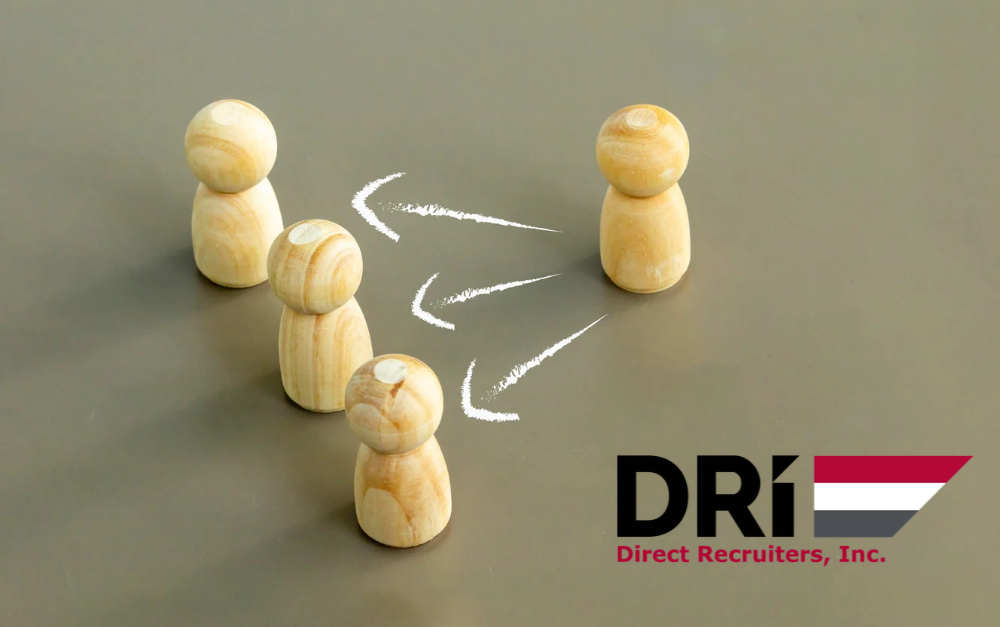
A traditional organizational chart documents formal authority. A shadow org chart reflects practical influence. For example, a Vice President may technically oversee a department, but a director who has been with the company for 15 years may be the person everyone trusts when a difficult decision must be made.
A CEO may have final authority over a major initiative, while another executive may be the person who builds internal support for it. Neither structure is necessarily right or wrong. They simply show two different sides of how an organization operates.
The formal org chart answers: Who is responsible?
The shadow org chart answers: Who influences what happens?
That distinction matters in recruiting.
Why Informal Influence Matters When Hiring
A candidate can look perfect on paper and still struggle after joining an organization. Sometimes the problem is not skill, experience, or intelligence. The candidate simply did not understand how decisions were really made. Imagine hiring a new Vice President of Sales. According to the job description, that person reports directly to the CEO and has broad responsibility for the sales organization.
On paper, the reporting structure seems simple. The company’s most influential regional sales leader may have been there for 20 years, hold deep relationships with major customers, and have significant credibility with the existing team. A new leader who ignores that person may create resistance almost immediately. A leader who understands the situation may instead recognize that employee as an important partner.
That is why strong executive search and recruiting strategies should look beyond titles and responsibilities. DRI offers customized recruiting and executive search services across C-suite, Sales, Engineering, Operations, IT, Legal, Supply Chain, HR, and other functions.
The Most Influential Person May Not Have the Biggest Title
Influence can come from many different places. Some employees gain influence because they have been with the organization for years and understand its history. Others become influential because they possess technical knowledge that few people inside the company have.
Some are trusted because they consistently solve problems. Others have unusually strong relationships across departments.
An executive assistant, for example, may understand how senior leadership operates better than many managers. A senior engineer may have no direct reports but still influence major product decisions. A top-performing salesperson may shape how the rest of the sales organization responds to a new leader.
These individuals often become informal centers of information and trust. That does not mean they should control every decision. It means companies should understand the role they play.
What Recruiters Can Learn from the Shadow Org Chart
One of the most valuable parts of an effective search is learning how the organization functions before candidates are introduced. DRI’s five-phase recruiting process starts with strategy and an in-depth understanding of what the organization is trying to accomplish with the hire. Questions about informal influence can add another layer to that process.
For example:
- Who does the CEO trust when making difficult decisions?
- Which employees have significant influence despite not holding executive titles?
- Who will this new hire need to win over?
- Which departments will this role depend on most?
- Who has historically resisted change?
- Who holds important institutional knowledge?
- Which relationships could help the new hire succeed quickly?
The answers can reveal qualities that might never appear in a traditional job description. A company may initially believe it needs an aggressive change agent, for example. After examining its internal dynamics, it may realize it needs someone who can introduce change while building consensus with several respected long-term employees. That is a very different candidate profile.
Shadow Org Charts Become Especially Important During Leadership Change
Informal influence becomes particularly visible when organizations are going through major transitions. A new CEO, acquisition, private-equity investment, restructuring, or rapid period of growth can shift formal responsibilities quickly. Informal relationships usually change much more slowly. This is especially important in senior-level searches.
Organizations using DRI’s recruiting services for clients may be filling positions where a new executive will need to influence multiple departments, work with existing leadership, and gain credibility quickly. DRI works with clients on executive search assignments and provides consultative support in evaluating and hiring candidates.
The situation can become even more complex for private equity, venture capital, and growth equity portfolio companies, where a new leader may be expected to accelerate growth while navigating an existing leadership team and established company culture. Understanding who really carries influence can help clarify what kind of leadership style will work.
The Shadow Org Chart Looks Different in Every Industry
Informal influence is not limited to one type of company. Within an industrial or manufacturing organization, a plant manager, engineering leader, or experienced operations employee may have enormous internal credibility. DRI recruits across industrial functions including executive leadership, sales, engineering, operations, project management, and manufacturing leadership.
Inside a technology organization, influence may sit with a product leader, engineer, technical founder, or customer-facing executive who understands both the technology and the market.
Within healthcare organizations, successful leaders may need support from clinical, operational, financial, technology, and administrative stakeholders.
In professional services, influence may be closely tied to expertise, client relationships, reputation, and tenure rather than purely organizational hierarchy.
The people and titles change. The principle does not. Every organization has people whose influence extends beyond their formal position.
The Risk of Ignoring Informal Power
Ignoring the shadow org chart can create problems long after a hire is made. A new executive might unknowingly bypass an influential employee during an important decision. A department leader may struggle to implement changes because the team still looks to a longtime employee for direction. A new hire may spend months trying to understand relationships that could have been explained before the person ever accepted the role.
In more serious situations, leadership may hire someone whose management style conflicts with the way the organization functions. That does not mean companies should hire candidates simply because they will fit comfortably into existing dynamics. Sometimes the entire purpose of the hire is to challenge the status quo. But even a leader brought in to create major change needs to understand the environment they are entering. Knowing where influence sits allows that leader to decide how to work with it.
Mapping Influence Before Starting a Search
Companies do not need to create an actual second organizational chart. Instead, leadership and hiring teams can ask a few practical questions before launching the search.
- Who are the people everyone goes to when they need something done?
- Who has relationships across multiple departments?
- Who possesses knowledge that would be difficult to replace?
- Who can create support for a new initiative?
- Who can quietly stop one?
Those answers can help define the interpersonal and leadership characteristics a candidate will need in addition to technical qualifications.
DRI’s recruiters work across a broad range of industry practice areas and functional areas, allowing search teams to consider both industry expertise and the responsibilities a position carries within the organization.
For some positions, that might mean identifying a highly collaborative leader. For others, it might mean finding someone comfortable challenging entrenched thinking. The important part is understanding the environment first.
Hiring for the Organization You Actually Have
Job descriptions are important. Reporting structures are important. Titles are important. But they are only part of the picture. Organizations are ultimately networks of people, relationships, experience, trust, and influence. Those relationships cannot always be captured by boxes and lines on an organizational chart.
When companies understand both their formal structure and their shadow org chart, they can make more informed hiring decisions and give incoming leaders a clearer picture of the organization they are joining. That is particularly important for mission-critical positions, where success often depends on much more than checking the right boxes on a résumé.
Since 1983, Direct Recruiters, Inc. has focused on building relationships with clients and understanding their industries, cultures, and organizational needs before identifying talent.
If your organization is preparing for a critical hire, DRI can help you look beyond the job description and identify candidates who have the experience, leadership ability, and interpersonal skills required to make an impact.
Learn more about DRI’s recruitment and executive search services or discuss your next hiring assignment with the DRI team.